Full marketing case study · Delo Trans
Full marketing for Delo Trans: how to build a steady flow of drivers into a trucking company
Published 1 October 2026 · by Yana Narynska, COO, Pixelco
A steady flow of drivers is an always-on media position, not a campaign you switch on when seats go empty. Delo Trans has been building that position with us for four years, channel by channel. This case study takes one quarter out of those four years, 2 July to 30 September 2026: 2,287 driver applications at a $22.86 CPL, about 25 a day, and $306 of advertising behind every driver hired, in a soft freight market.
Delo Trans is a carrier in Plano, Texas, hiring company drivers and owner operators on power only. The company has been with us for four years, and the marketing presence was built step by step across those years rather than bought as a package: Meta advertising and the social accounts first, content and video after that, Google Ads last. Spend, clicks and applications below are read daily from the ad accounts by our reporting platform.
Full marketing is one funnel, not four invoices. Each channel owns a stage: paid social buys reach, the account carries proof, search captures intent, video builds the brand equity that lowers the cost of all three.
The carrier who holds that funnel through the slow quarters is not spending more than the one who starts in a panic. He is spending earlier, and the difference shows up as CPL.
What full service marketing covers for a trucking company
Driver recruiting has the same funnel as any other acquisition problem: reach, consideration, intent, conversion. A carrier who buys only one channel is buying one stage of it and paying the other three in lost applications. The wider picture is in marketing for trucking companies.
Top of funnel
Meta ads
The volume channel. Paid social puts the offer in front of drivers who were not searching today, and the instant form takes the application before they leave the feed. This is where the 2,287 applications came from. Account structure is in Facebook ads for truck driver recruiting.
Consideration
Social media: Instagram & Facebook
The proof layer. A driver checks the profile between the ad and the form, and an empty account raises the cost of every click you already paid for. What that does to CPL is measured in the STL Truckers case.
Intent
Google Ads
Smaller audience, warmer: the driver is already searching for a carrier. Search converts on the landing page, which is why it punishes a bad application form harder than any other channel.
Brand
YouTube
The slow compounding channel. Video buys familiarity, and familiarity is what makes a name in the feed cost less to convert a year later. It is not a lead source and should not be bought as one.
The offer is what all four carry, and it is the client's own: 88 percent of an $8,000 to $12,000 weekly gross, $2.50 to $3.00 a mile, 90 percent hook and drop, no trailer fees, six months of CDL-A, 2019 truck or newer. Advertising distributes an offer, it does not improve one.
Beyond the standard recruiting creative and the offer cards, we produce content made to stop the scroll. A driver gives any advertisement about one second, and the asset that wins that second is the one that gets the offer read at all.
This one is shot and animated for the brand, not for a single campaign. It runs in the feed, in stories and on the channel, and it keeps working while the offers underneath it change.
Brand video produced for Delo Trans, 2026.
Social media content for a carrier: what it actually does
Organic content is the proof layer, and it is bought like a portfolio, not like a placement. Some posts reach a city, some reach a state, and the account is paid back by the ones that travel.
Instagram insights from the Delo Trans account, September 2026. Everything here is crossposted to Facebook.
Views are not the metric. The reel with 899,822 views produced 296 interactions, while the one with 594,677 put 441 new followers on the account. Reach travels, but only some of it lands on an audience that hires. Nobody picks that winner in advance, which is why the content plan runs weekly and why a carrier who posts only before a hiring push never gets one.
These are also the assets the paid side runs on. A reel that earns 110 shares organically is the creative we put budget behind, and the audience that already watched it is the one retargeting costs least to reach.
YouTube for trucking companies: the channel an ad cannot replace
Above the funnel sits the question no advertisement has room for: is this company worth four years of a driver's career. Long form video is where that gets answered, and it is the reason a name in the feed converts below the market rate a year later.
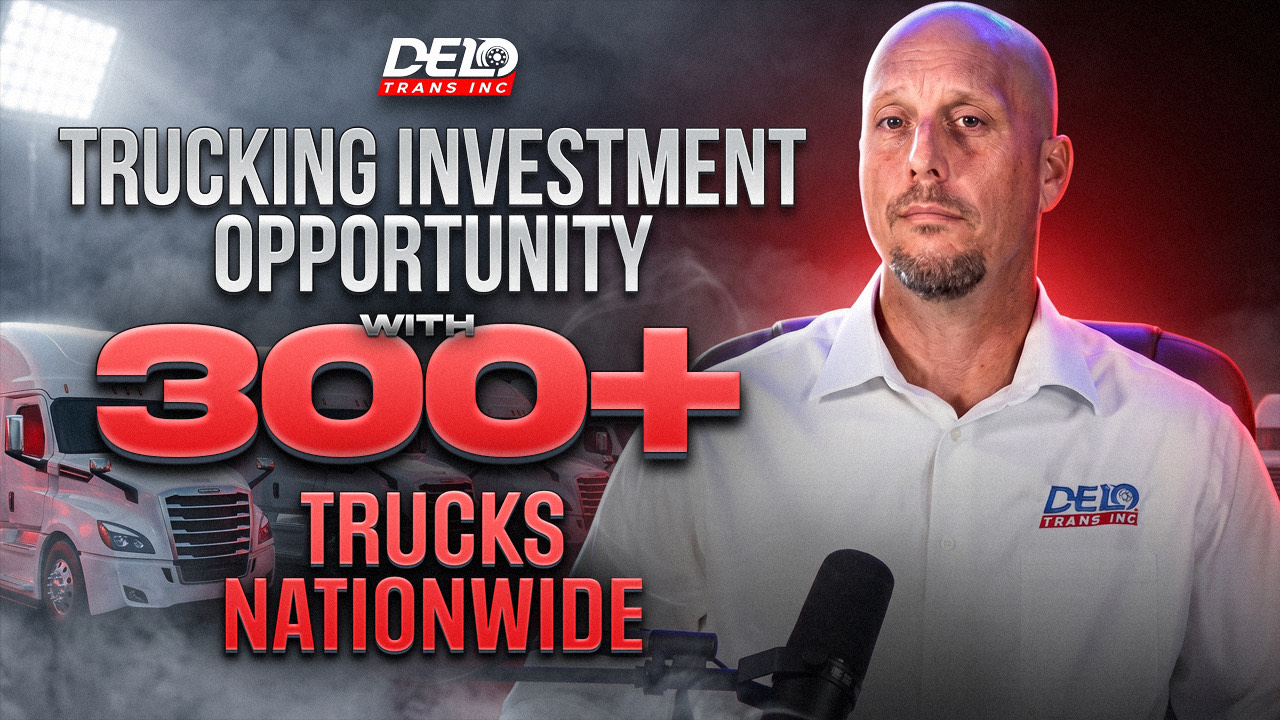
How to Invest in Trucking, on the Delo Trans channel. Company drivers and owner operators watch this too: it is the same signal of a company that is not disappearing next quarter.
What one quarter of Meta ads for driver recruiting produced
The four years are the context. Every figure below is one quarter out of them, 2 July to 30 September 2026, from a single Meta ad account. Nothing on this page is a four year total.
| Ad spend | $52,274 |
| Driver applications | 2,287 |
| Cost per lead | $22.86 |
| Cost per driver hired | $306 |
| Applications a day | 25 |
| Clicks | 31,804 |
| CPC | $1.64 |
| CTR | 3.73% |
2 July to 30 September 2026, one Meta ad account, company drivers and owner operators. Spend, clicks and applications reported daily by our advertising platform. Cost per driver hired is the carrier's own average across the period, reached on the SLTM methodology run across all four channels.
| Month | Spend | Applications | CPL |
|---|---|---|---|
| July | $14,542 | 734 | $19.81 |
| August | $18,443 | 816 | $22.60 |
| September | $19,289 | 737 | $26.17 |
Same account by calendar month. July starts on the second.
Read it without the spin. Auction prices rose through the quarter: September cost 33 percent more than July for three more applications, which is what the market did to everyone bidding on drivers this summer.
What held is throughput. Roughly 750 applications a month, with no launch, no learning phase and no week lost to ad review. Price is the market's variable. Having a channel in place when the price moves is the carrier's.
Google Ads for trucking companies: where it fits and when to add it
Google is the intent channel. Nobody meets it by accident: the driver is already typing trucking jobs, a city, sometimes a carrier's name. Per click it converts better than anything in the feed, and there is far less of it to buy.
That is why it goes second, not first. How many drivers search for your company depends on how many already know the name, and the name is built in the feed and on video, not in search. A carrier who opens Google before Meta is renting demand he has not created yet, and paying the auction price for it.
Search is also the least forgiving channel of the four. Paid social takes the application inside the platform; search sends the driver to your website, so every weakness in the application form is paid for at full price. Three fields first, name, phone and CDL class, with documents after the call, before a dollar goes into search.
Before search gets a dollar, four things from our own methodology have to be in place, and none of them live inside Google Ads.
A Google Business Profile, filled in
Drivers arrive in search in verification mode, not browsing mode: they check the address, the photos, the reviews and decide whether you are real. The profile answers that before the ad has to.
A page that loads in under three seconds
Google's own Need for Mobile Speed report put 53 percent of mobile visits abandoned past three seconds. Search traffic is paid for on the click, so a slow page burns the budget before anyone reads the offer.
A form that asks only what the first call needs
Name, phone, email, ZIP, CDL class, driver type, years of experience, driving record. Documents and truck details belong after the conversation, and every extra field costs submissions.
Someone who answers in minutes
Speed to lead is the gap between a submitted form and your first contact, and it is the one part of the funnel that depends on nothing but internal discipline. A driver who filled the form is at peak intent for a very short window.
That is the order we ran here. Meta advertising and the accounts first and for years, content and video after, and Google Ads opened only in 2026, when there was a name to search for and a funnel able to take the traffic.
Truck driver recruiting in a soft freight market
When rates fall, marketing is cut first and recruiting is cut inside it. Then freight returns, three trucks sit because drivers left, and the company restarts from zero in the same week its competitors are hiring. Four assets separate the always-on carrier from that one.
Account learning
Every application teaches the platform who converts. That signal is attached to the account, not the budget, which is why a live account starts where a new one finishes.
A creative library
Frequency kills response. A year of tested creative means the next ad goes live the day the old one fatigues, with no exploration cost.
Brand equity in the feed
A name a driver has seen on video and in his feed converts below the market rate. It never appears as a line item, only as a lower CPL.
A funnel already debugged
Form, confirmation, callback speed. Each was broken once and fixed in a quiet month, not while live applications went cold.
What full marketing costs for a trucking company
We do not publish what any client pays. These are our standard rates, the ones any carrier gets on the call.
| Meta ads, service fee | $2,000 a month |
| Meta ads, media budget | from $2,000 a month |
| Social media | $1,000 to $2,200 a month |
| Google Ads | $2,000 a month |
| YouTube | $2,000 to $5,000 a month |
Pixelco rates, 2026. Media budget goes to the platform, not to us. We will not run a hiring account below that floor: under it the account never exits the learning phase.
Measure the return against the cost of an empty seat per week, not against the invoice. At that comparison $306 of advertising behind a hired driver is the cheapest input in the hire, and the expensive part is everything after it, which is broken down in what it costs to hire a truck driver.
CPL is also the only metric the advertising owns. Cost per hire is set by callback speed and by what happens in the first hour, which is why recruiting and marketing have to report to the same table. The method we work by is the SLTM methodology.
How to build a steady flow of truck drivers at your company
Leads start almost immediately. A waitlist does not. A funded Meta account usually returns the first applications inside the first week, and that speed is what makes advertising easy to judge too early. What takes years is everything that makes the next application cheaper than the last one.
| When | What you actually get |
|---|---|
| First week | First applications. Cost per lead jumps around, because the account is still learning who converts. |
| Months one to three | Cost per lead settles, a tested creative set exists, and you find out whether the problem is the traffic or the callback. |
| Months three to twelve | Drivers who have seen you before start applying, your company name appears in search, and the first referrals arrive. |
| Year two and beyond | Applications keep coming when you have no opening. That is the waitlist, and it is the point of the whole exercise. |
The order is the same for any carrier. The speed depends on budget, offer and how fast somebody calls back.
The waitlist is the part that changes the economics. A carrier without one hires under pressure: a truck is parked, the recruiter takes whoever answers, and the cost per hire is whatever the market charges that week. A carrier with one seats a driver from a list of people who already applied, already know the pay and already watched the account for months. Same advertising budget, different position at the table.
Practically, you build it by not throwing away what you cannot seat today. Every qualified driver who applied when there was no truck goes into a list with the date and what he drives, and gets a call the day a seat opens. That list is worth more than any single month of advertising, and it only exists if the advertising ran in the months when you were not hiring.
So treat the budget as an investment with a compounding part. Cut it in a slow quarter and the account loses its learning, the content goes stale and the list stops growing. Hold a smaller number through the same quarter and the money keeps buying something that is still there a year later.
Where to start: the minimum base
A carrier who is starting today does not need all four channels in the first month. Six things come first, they are the minimum base under any of this, and nothing here needs an agency.
Nine posts before the first ad
Set up the Instagram and Facebook accounts properly and publish at least nine posts that show a driver what working for you looks like. Advertising into an empty profile pays for clicks that end nowhere, and by Capstone Logistics' count about three quarters of drivers check Facebook daily.
A Google Business Profile and one fast page
Drivers verify a carrier before they apply. A filled profile and a one-page site that loads in under three seconds is the minimum presence that lets search work at all.
A form built for the first call
Name, phone, email, ZIP, CDL class, driver type, years of experience, driving record, own truck yes or no. Documents after the conversation. The form filters, it does not interrogate.
Speed to lead measured in minutes
The gap between the submitted form and your first call is the part of the funnel that depends on internal discipline alone. A small carrier beats a large one here, or loses to one that answers faster.
Ten numbers, not a dashboard
Impressions, CTR, leads, cost per lead, valid contacts, qualified candidates, calls, offers, actual starts, cost per start. Below that set, hiring is run on intuition.
Sixty minutes a week, same slot
Fifteen minutes on inbound by channel, twenty on where candidates are lost, twenty on decisions, five to write down three actions and who owns them. Friday morning, while there is still time to react.
All six are laid out in full, with the worksheets, in the SLTM methodology.
FAQ
Which channel should a trucking company launch first?
Meta ads together with the accounts they point at. It is the only channel that reaches drivers who were not looking for a job this morning, it takes the application inside the platform, and it builds the audience the other three channels later feed on. Everything else is added on top of a funded Meta account, not instead of it.
Is Google Ads worth running for a trucking company?
Yes, second, not first. Search catches the driver who is already looking and converts better per click, but there is far less of that traffic and it depends on how many drivers already know your name. It is also the least forgiving channel: it sends people to your website, so a slow page or a long form is paid for at full price. Our rate for it is $2,000 a month.
What content do you run on a carrier's social media?
Seven categories, each answering a doubt a driver actually has: conditions and how pay is calculated; the material environment, the trucks, the yard, the shop; the human environment, the owner and the dispatchers on camera; process content showing how the work is run; social proof from drivers already with the company; position content on what the carrier stands for; and recognition content. Nine posts of that kind are the minimum before advertising is worth buying.
How much does full marketing cost for a trucking company?
Meta ads are a $2,000 monthly service fee plus your own media budget, which we will not take below $2,000 a month for a hiring account. Social media runs $1,000 to $2,200 a month depending on filming and editing, Google Ads is $2,000 a month, and YouTube is $2,000 to $5,000 a month depending on production. What a driver costs to hire on top of that is broken down in our article on the cost to hire a truck driver.
How fast should you call a driver who submits an application?
In minutes, not the next day. The driver who just filled the form is at peak intent and is usually filling other carriers' forms the same evening. Speed to lead is the only part of the funnel that depends on nothing but internal discipline, which is where a small carrier beats a large one.
Should we cut driver recruiting ads when freight is slow?
Cutting is what makes the next hiring push expensive. The account loses the learning it paid for, the content goes stale, and you restart from zero in the same week every competitor is hiring. An always-on budget through a slow quarter costs less across the year than a cold restart in a busy one.