Meta Ads (Facebook and Instagram) for trucking companies
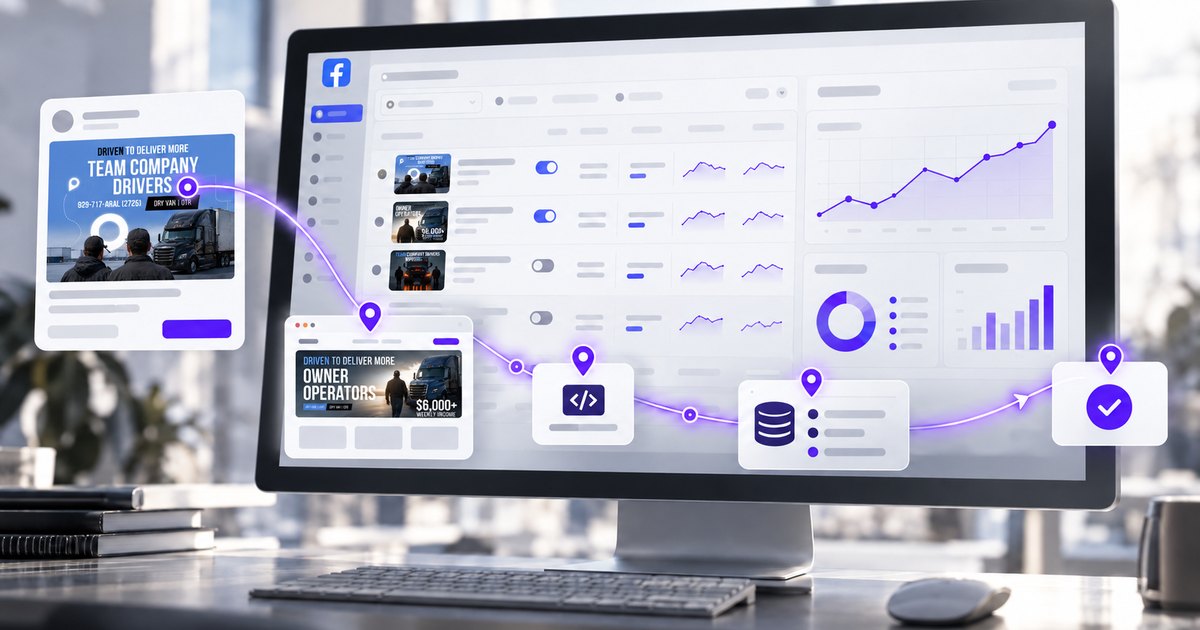
Meta ads for trucking companies: how to hire drivers below the market rate
Published 8 October 2026 · by Yana Narynska, COO, Pixelco
Every driver a recruiting agency seats costs you a placement fee. The next one costs you again. Meta ads flip that arithmetic: you pay per application, not per head, and the applications land in a list that stays yours. On our accounts a driver lead averages $15, and a hired driver averages $350 of advertising.
And unlike a placement fee, it accumulates. Every application Meta brings lands in a driver database that belongs to you, and over the years that database runs into tens of thousands of names you can call again. The longer the advertising runs, the better the account knows who converts and the more drivers already recognize the company, so the $350 behind a hired driver keeps coming down instead of resetting with every hire.
That number is not what an ad account does on its own. Behind it are five steps, and only the last one is an ad going live. Skip any of the first four and the money still goes out the door: the ads run, the clicks get paid for, and every application costs you two or three times what it should.
What Meta ads are and why trucking companies run them
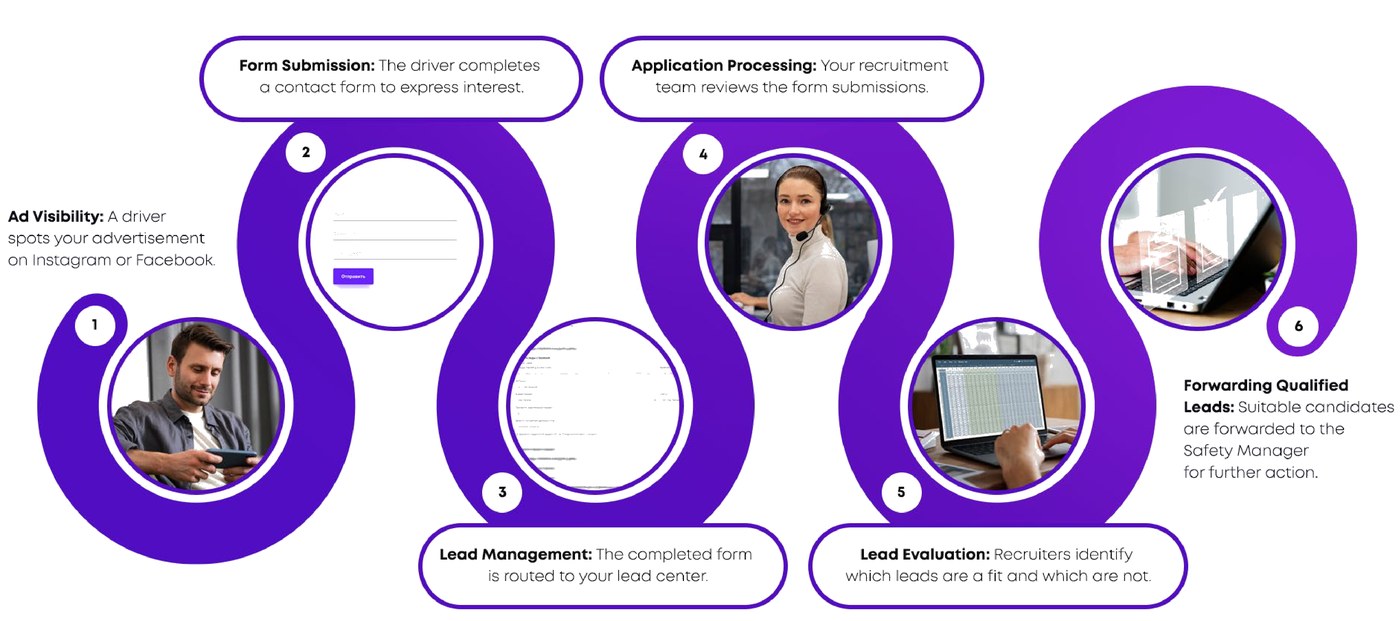
Meta ads are the paid advertising inside Facebook and Instagram. For a trucking company they do one job: show the offer in the feed in the regions you hire from, and take the application inside the app. The driver taps, a form opens with his name and number already filled in, and two taps later your recruiter has a lead.
The form is what makes it different from a job board. Nothing depends on how fast your website loads or how long your application page is, and that is where applications are usually lost. The driver never leaves the app, so the gap between seeing the offer and your recruiter having his number is about ten seconds.
It is also the cheapest application in driver recruiting, and it stays yours. A recruiting agency charges per driver seated and keeps the candidate pool. Here the budget buys applications into your own list, and the ad account keeps the learning.
What it produces
Here is how that looks on the accounts we run.
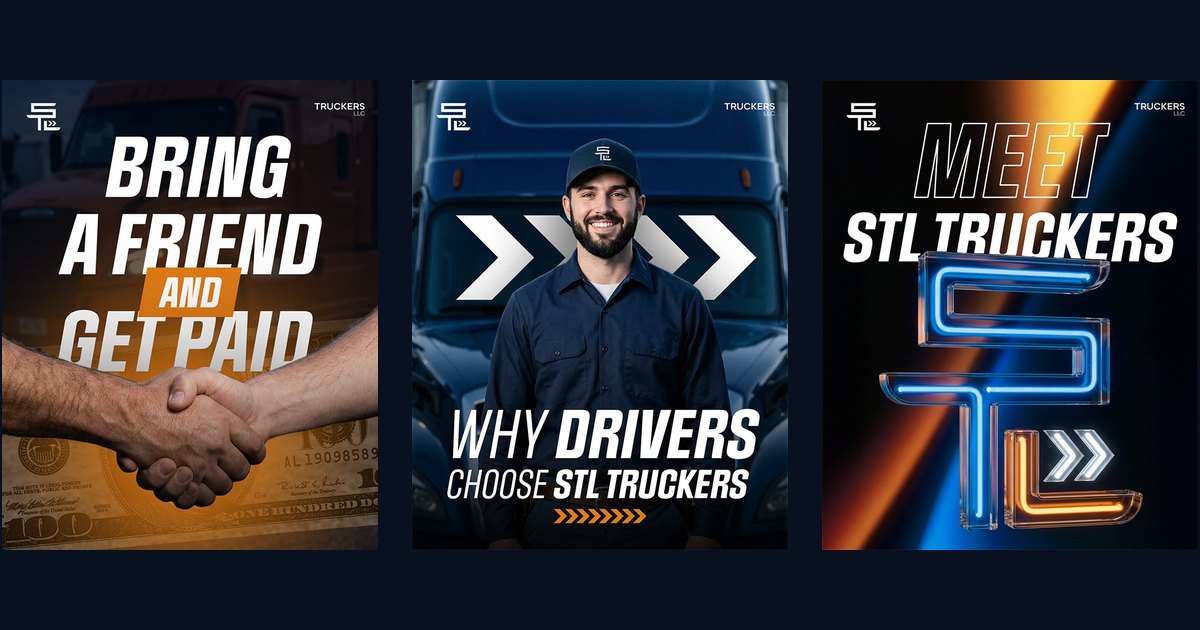 13 drivers hired at $456 of advertising each · STL Truckers →
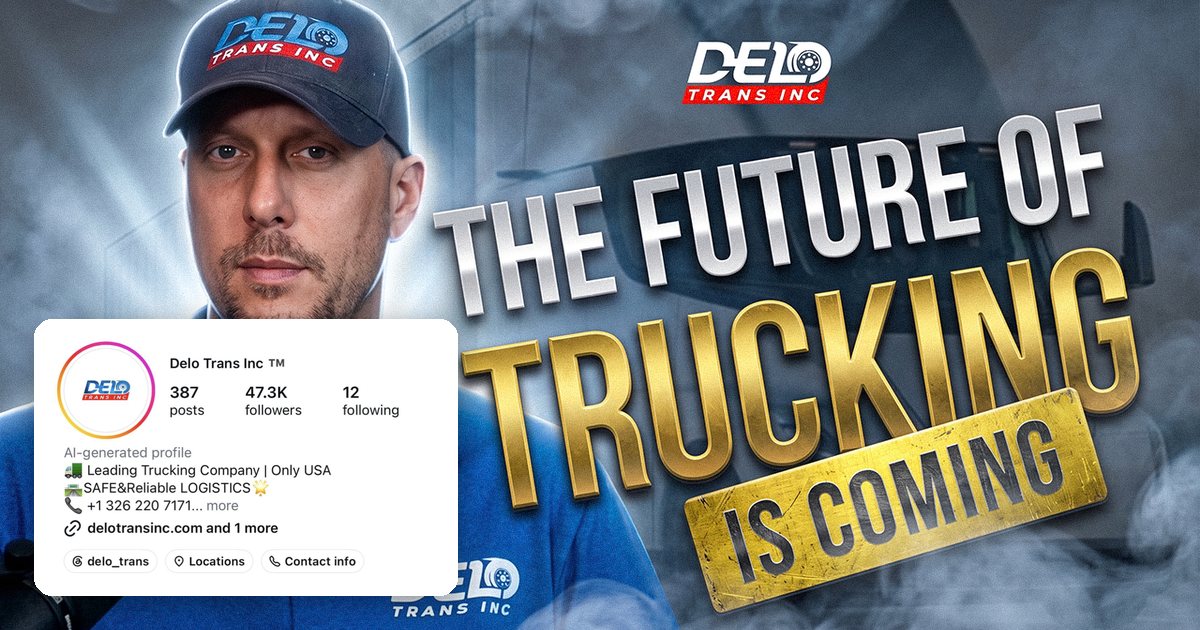 2,287 applications at $22.86 each · Delo Trans →
 47 flatbed drivers hired at $898 each · Flatbed carrier →
 1,817 leads at $8 each · ParkMyTrucks →
Every figure comes from the ad account it was spent in. Each case is written up in full.
Nine years. 500+ trucking companies. One industry.
We do not run restaurant ads between trucking clients. Every account in our portfolio is a carrier, a broker or a company that sells to them, and driver recruiting is what 9+ years and more than 500 companies went into learning.














































Which is why your first campaign does not start at zero. Which offers make a driver stop and which only look good in a meeting, what a creative has to say in its first second, how fast an audience burns out in a mid-size market, what the special ad category still leaves you: we paid to learn all of it. You get it on day one.
How the work runs
From signing to the first applications landing is five working days. Most of that week is not spent in the ad account at all: it goes into the offer, the profile a driver checks before he applies, and the form he has to fill in. Advertising is switched on last, because it is the only part that is cheap to change later.
Here is the whole sequence, five steps, in the order we run them. The first one is yours and takes about half an hour. The other four are ours.
Step 1: your account and the company brief
Everything we later write about your company comes out of this form, which makes it the half hour that decides the whole week. You get a login to your own dashboard and fill it in once.
| You fill in | What it is used for |
|---|---|
| Company details | Legal name, DOT and MC, domiciles and terminals, fleet size, equipment and years. This is what goes into the ads and what a driver verifies before he applies. |
| Who you are hiring | Company drivers, owner-operators, lease, solo or team, and how many seats you need filled a month. Separate hires get separate campaigns. |
| The offer | Pay per mile or per hour, average weekly gross, bonuses, home time, hook and drop, trailer fees, benefits. Every number on a creative comes from here. |
| Requirements | CDL class, months of experience, endorsements, driving record, truck year for owner-operators. These keep the budget off drivers you cannot hire. |
| Who answers | Who calls the driver back, from which number, and in what hours. Advertising that lands on nobody is money spent twice. |
| Access | Facebook page, Instagram and the website. We are added as a partner; nothing is transferred away from you. |
The brief in your dashboard. It is filled once and edited whenever the offer changes, and the same dashboard is where the reporting shows up later.
From the brief we build the driver profile: what the segment you are hiring earns elsewhere, what it is afraid of, what it wants, and what actually makes it choose one carrier over another. Every creative is checked against that document before it goes live.
Alongside it goes an audit of what you already have: the accounts, the website, the application form, the callback process, and whatever advertising ran before. Most of the findings are not advertising problems, and they are cheaper to fix before the budget starts moving.
Step 2: the social media identity the ads point at
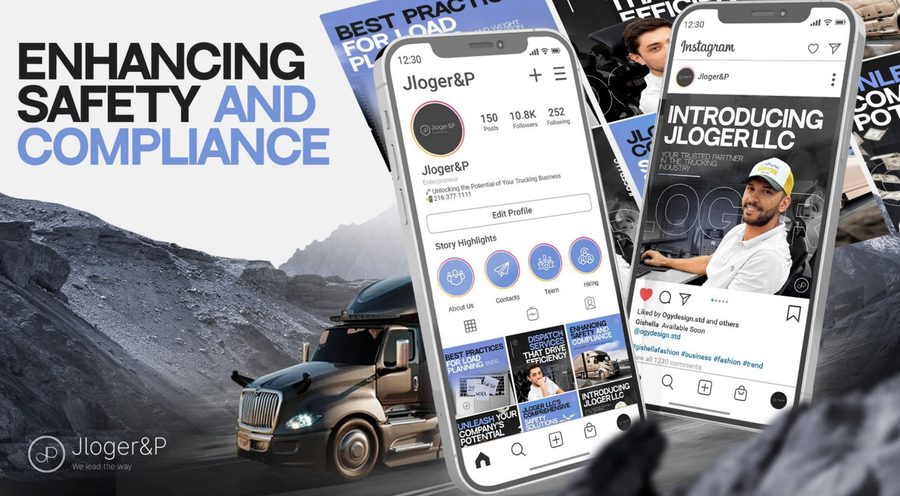
Here is what a driver does the moment your ad catches him: he taps the company name. An account with three posts from two years ago sends him straight back to the feed, and you paid for that click either way. So the profile gets built before a dollar goes into advertising.
What gets built: the offer in the carrier's own words, the bio and profile design, highlights answering the three questions every driver asks before he calls, and the first posts covering pay, equipment, people and lanes. Shot and written for that carrier, not pulled from stock.
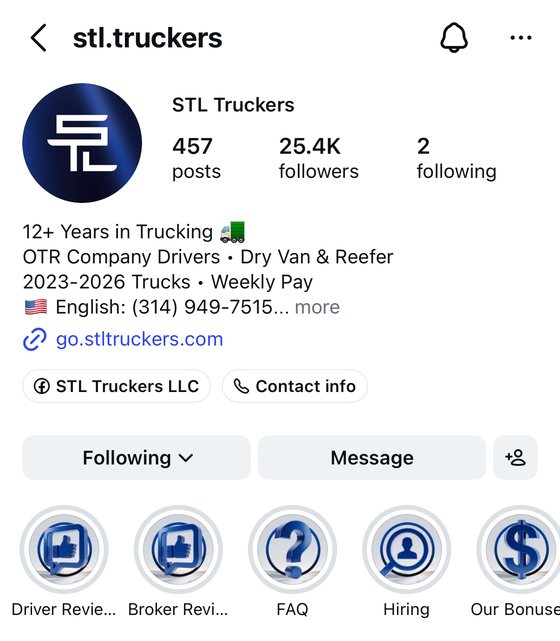
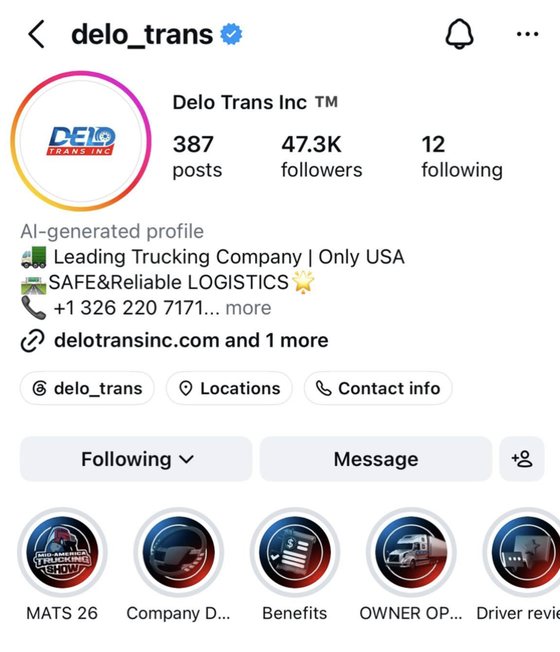
Read those two bios the way a driver does. Years in business, what he would be driving, what he would be hauling, how often he gets paid, a phone number and a link that goes straight to the application. The highlights underneath carry driver reviews, the FAQ, hiring, benefits and bonuses, so the answers sit one tap away instead of waiting for a call back.
There are two ways to get that account, and they answer different problems. One builds a brand drivers know before they ever see an ad. The other gets the page presentable fast, so the traffic you are already paying for lands somewhere that looks real.
Social media management
$1,000 to $2,200 a month
- 2 to 6 posts and 2 to 6 story days a week, by package
- Content plan, trend research, scripts for office and drivers
- Filming guidance, editing, graphics, captions, posting
- Roughly 80 percent video, 20 percent graphic
One-time Instagram branding
$1,000 once
- Profile setup and the full visual identity
- 9 designed posts and 40 highlight stories
- Highlight covers, story templates, bio and offer copy
- Brand colors, fonts and logo lockups
| Ongoing management | One-time branding | |
|---|---|---|
| What it buys | A brand that keeps growing | A page that converts ad traffic |
| Cost | $1,000 to $2,200 a month | $1,000 once |
| New content | 2 to 6 posts and 2 to 6 story days a week | 9 posts and 40 stories, once |
| Ready in | Builds over months | Ready to run ads to from day one |
| Pick it when | You are in this for the long run and want inbound applications of your own | You are paying for clicks today and the profile is letting them down |
Both work under Meta ads. Carriers who run advertising all year usually start with the one-time build and move to management once the account is earning its keep.
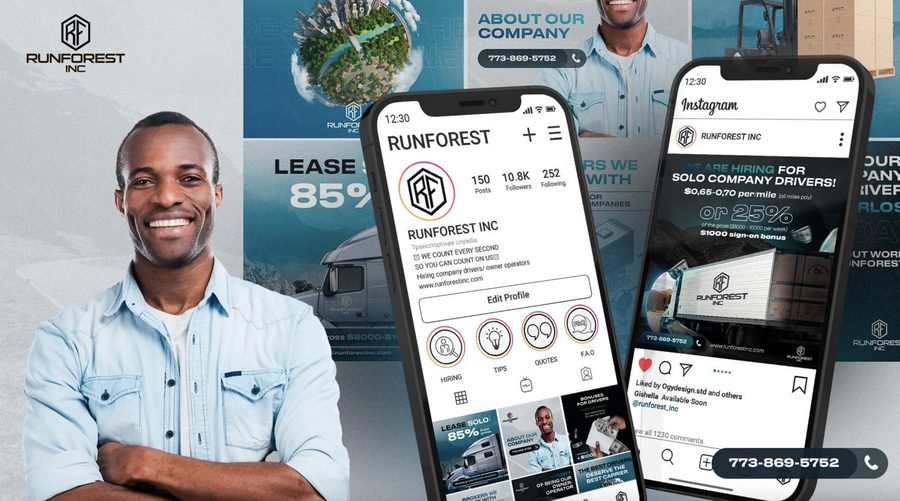 Trucking company: branding and social media ↗
 Logistics company: logo and identity ↗
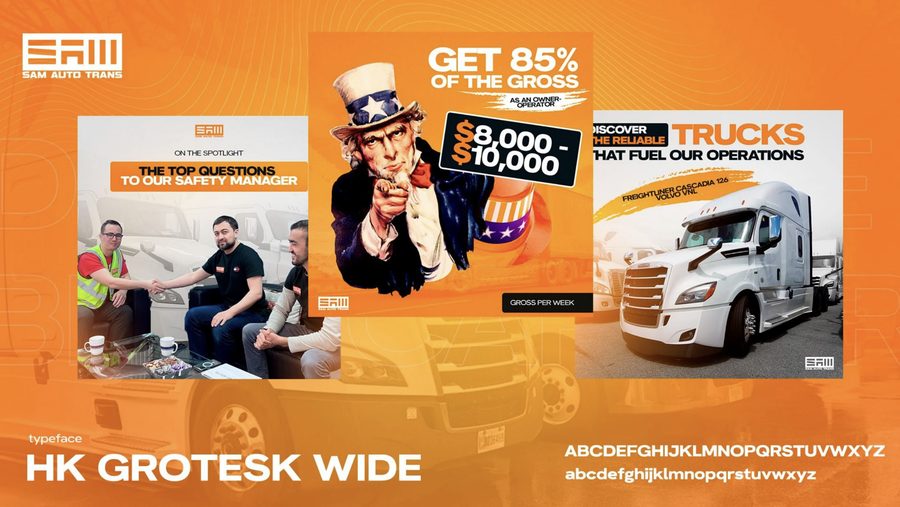 Sam Auto Trans: logo and identity ↗
Full case folders on Behance.
How much it changes the cost per application is measured in the STL Truckers case, where the account and the advertising ran as one job.
Step 3: the ad account and the special ad category
Business Manager, the ad account, the page and Instagram are set up on your own assets, with us added as a partner. Everything we build stays on your side of the table if we ever stop working together.
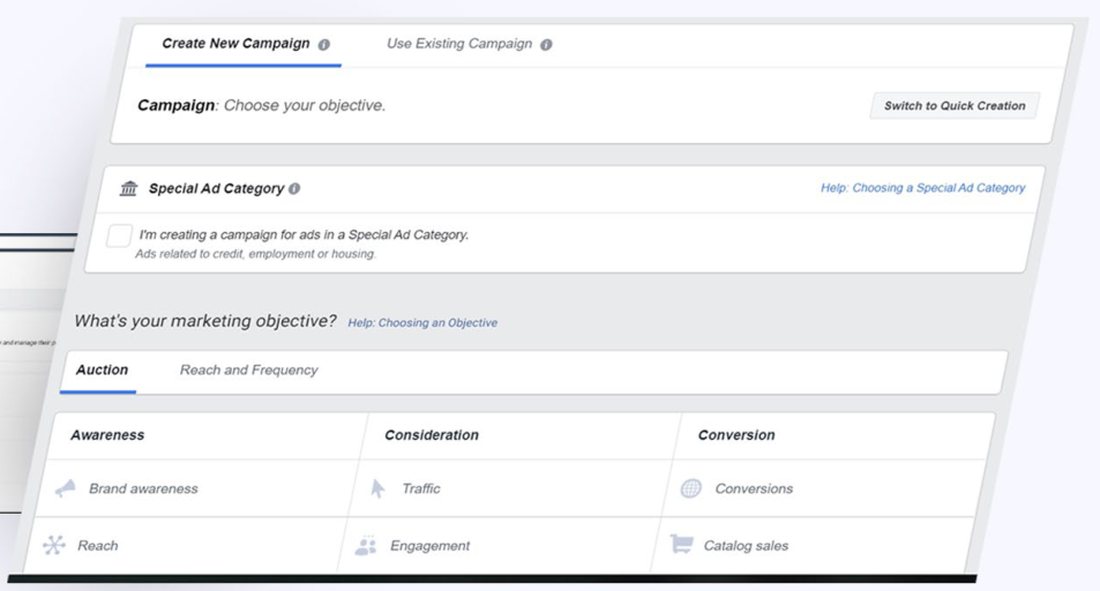
Then the part that catches most people out. Driver recruiting is employment advertising, and Meta places it in a special ad category: age, gender and detailed targeting are taken away, and the geographic radius is widened. Campaigns built the normal way get rejected or quietly under-deliver. What is left to work with, and how to build around it, is written out in the special ad category for trucking.
Step 4: the funnel and the creatives
A driver gives your ad about a second, and he spends it looking for the number. So the offer goes on the creative itself, never in the caption under it: pay per mile or per hour, the lanes, home time, equipment year, the requirements, one call to action.
Separate sets are built for separate hires. Company drivers and owner-operators are different jobs with different economics, and a creative that tries to speak to both buys clicks from people who disqualify themselves after you have paid. Account structure is in Facebook ads for truck driver recruiting.
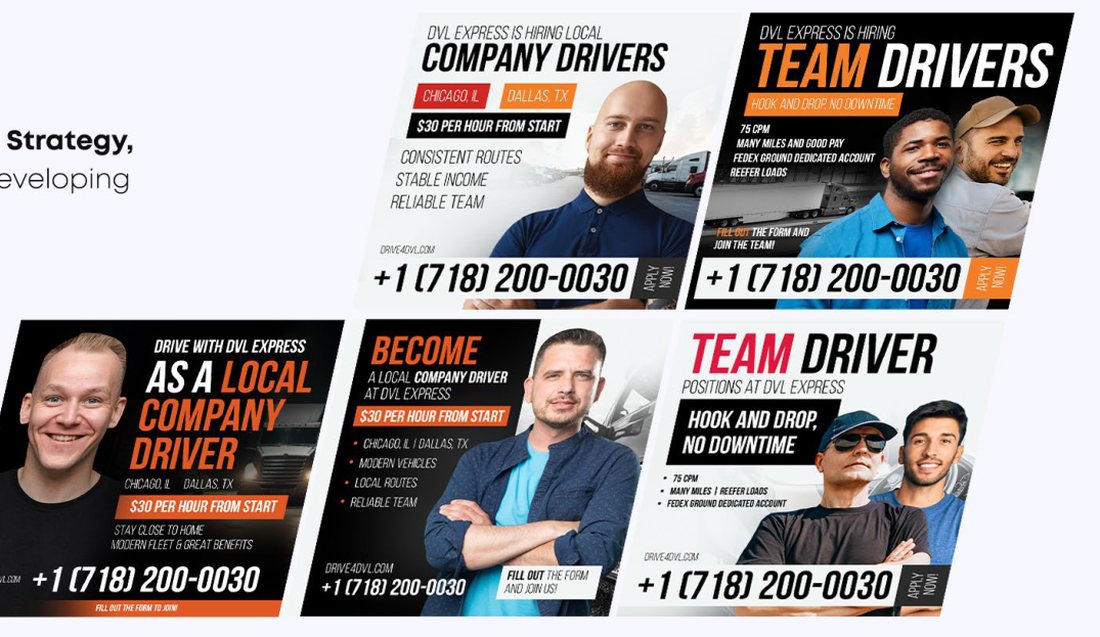
Formats are mixed on purpose: static for the offer, video for the yard and the people, stories for frequency. Creative wears out, so the library is built to be replaced on a schedule rather than when the results fall.
Step 5: launch and optimization
Now the ads go live, with the form inside Meta so the driver never leaves the feed. One setting decides everything after that: we optimize to the submitted application, not the opened form. Bid on the wrong event and the algorithm gets very good at finding people who open your form and walk away.
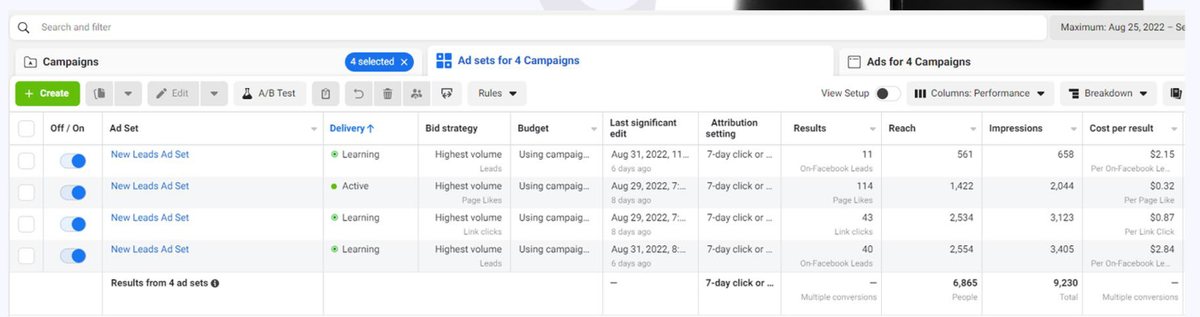
From there it is weekly work: what is spent, what the cost per application is by ad set, which creative is tiring, which audience is saturating. The account needs enough volume to leave the learning phase, which is why we will not run a hiring account below $2,000 a month of media.
What happens after a driver taps the ad
This is where most recruiting budgets quietly die. Advertising ends at the application, and the next hour decides whether that application becomes a driver in a seat.
What it costs and what a hire works out to
| Service fee | $2,000 a month |
| Media budget, paid to Meta | from $2,000 a month |
| Average cost per driver lead | $15 |
| Average cost per driver hired | $350 |
Averages across the accounts we run, read daily from the ad accounts by our reporting platform.
Cost per hire is the number a carrier actually feels, and advertising only sets half of it. Two carriers spend the same money and get the same hundred applications. One seats three drivers, the other seats ten, and the difference is almost never the ads. The arithmetic for the whole hire is in what it costs to hire a truck driver.
We own the application and its price. You own the hour after it lands, and that hour moves your cost per hire more than any targeting change we could make.
Why it comes out cheaper than a recruiting agency
An agency invoice buys you one driver. This buys you a channel. Three things stay with you after the money is spent, and none of them appear on a placement fee.
You pay for applications, not per head
A placement fee is charged per driver seated, every time. Advertising cost sits per application, and it falls as the account learns.
The database stays yours
Every driver who applied is in your list, with the date and what he drives. An agency's candidate pool is not.
The brand compounds
Months of advertising and content leave a name drivers recognize. A recruiter's placement leaves nothing behind when the invoice is paid.
FAQ
What ad budget do I need?
It depends on how many drivers you want to hire a month. The minimum is $2,000 and that is where we start the first month, then the budget follows the number of seats you need: at an average $350 of advertising per hired driver, ten seats a month is roughly $3,500. Our clients run anywhere from $2,000 to $40,000 a month.
How many drivers will the budget bring?
It depends on the category and on your terms. Owner-operators cost more to recruit than company drivers, and inside each category the number moves with your offer: pay, bonuses, the lanes, home time, equipment. There are a lot of variables, so the honest answer is a range we narrow down once we see your brief.
How long before the first applications?
Five working days from signing. Most of that week goes into the offer, the profile and the application form, not into the ad account itself, and the advertising is switched on last.
Do I need a website for this to work?
No. The form lives inside Facebook and Instagram, so a driver applies without leaving the app. A website helps him verify you before he applies, but the application itself does not depend on it.
What if I have no pages and no ad account?
We create them for you, and that is included in the price: Business Manager, the ad account, the Facebook page and the Instagram profile, all on your own assets. Filling those pages with content is the part that depends on what you pick: the one-time build or ongoing management.